> For the complete documentation index, see [llms.txt](https://knowledge.illumina.com/llms.txt). Markdown versions of documentation pages are available by appending `.md` to page URLs; this page is available as [Markdown](https://knowledge.illumina.com/software/on-instrument-analysis-software/software-on-instrument-analysis-software-reference_material-list/000007401.md).
# 如何使用MiSeq Reporter从未完成的run中创建出FASTQ文件
\
当MiSeq测序仪在测序过程中断时,用户也可得到部分FASTQ文件。用户可以通过检查并确认测序中断前最后一个含有完整bcl文件的cycle、修改运行文件以及重新分析这几个步骤完成。本文将具体阐述如何利用MiSeq Reporter对不完整的测序结果生成FASTQ文件。如果您使用的是Local Run Manger, 请参阅技术文档 [Local Run Manager: 如何利用不完整的测序结果生成FASTQ文件.](https://knowledge.illumina.com/software/on-instrument-analysis-software/software-on-instrument-analysis-software-reference_material-list/000007112)
在重新分析前,请知悉:
* 如果准备在MiSeq测序仪上进行二级分析,请确保该仪器上没有正在进行的测序实验,否则MiSeq Reporter软件将无法开始新的分析。同样,如果在正在进行二级分析的MiSeq 上开始新的测序实验,MiSeq Reporter 会自动停止当前分析。
* 该分析过程只能对保存在本地机器上不完整的部份测序数据进行重新分析,而无法对保存在Basespace上的测序数据进行重新分析。
* 如果仪器在标签序列测序完成前中断(比如,在测index 之前Read 1时中断),那么样本也将沒有index read 资料而无法进行拆分。
* 请确认**D:\Illumina\MiSeqAnalysis\\\**文件夹中不含有**RTAComplete.txt**文档。
请参考以下步骤进行拆分FASTQ文件:
1. 打开**D:\Illumina\MiSeqAnalysis\\\\Data\Intensities\BaseCalls\L001**文件夹,请检查并确认最后一个含有完整bcl文件的Cycle(C\*.1)。使用V2试剂时,每个cycle文件夹中含有28个\*.bcl文件。使用V3试剂时,每个cycle文件夹中含有38个\*.bcl文件。
*注意: 如果bcl文件在许多或所有文件夹下都没有,可能需要通过手动运行RTA软件来进行恢复。这种情况下,请联系illumina技术支持*([chinasupport@illumina.com](mailto:techsupport@illumina.com))
举例说明如何检查并确认最后一个含有完整bcl文件的cycle:
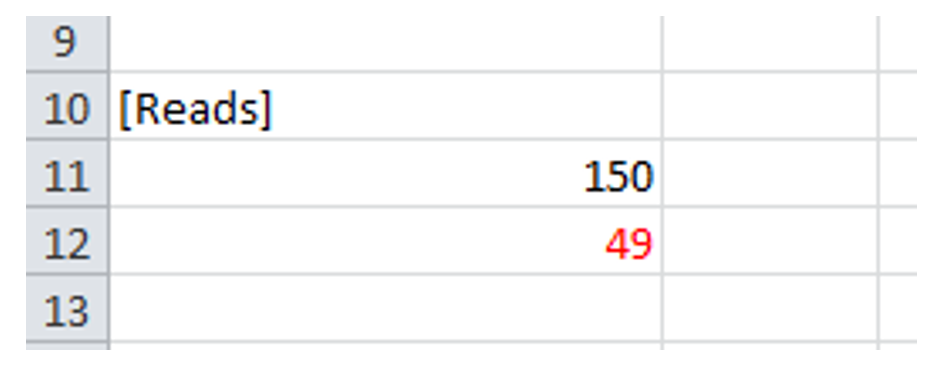
比如,在运行2 x 150 + 6 bp单 index的测序时,仪器在第207个cycle中断了。如果检查第 206个cycle(C206.1)文件夹中含有完整的bcl文件,经验建议我们选择完整cycle的前面一个cycle之前的数据进行分析。针对本案例,我们选择第1个cycle到205个cycle进行接下来的分析。 计算公式为205 cycles= (Read 1) 150 + (Read 2 Index) 6 + (Read 3) 49。因此,本次测序的断点为R3的第49个碱基。
2. 备份**D:\Illumina\MiSeqAnalysis\\\**下的**RunInfo.xml**文件和**SampleSheet.csv**文件。可以选择通过重命名的方式进行备份,比如**RunInfo.xml.BAK and SampleSheet.csv.BAK。**请使用Notepad对这两个文件的原始文件进行编辑和保存。 如果在运行双端测序时另外一端序列(Read 3)还没进行测序时中断,请在这两个文件中删除相应的行。比如:
3. **RunInfo.xml**文件的修改。在该案例中,Read 3 只检测了49个cycle,因此需将Read 3的NumCycles修改为49(具体如下)。
\
\
\
\
\
4. **SampleSheet.csv**文件的修改,修改\[Reads]信息:
5. 请拷贝以往成功测序文件夹中的**RTAComplete.txt** 文件到当前目录下。
6. 一旦文件拷贝到当前目录,MiSeq Reporter会自动进行分析,并在**D:\Illumina\MiSeqAnalysis**文件中产生一个**QueuedForAnalysis.txt**文件。用户可以在网页浏览器登录[http://localhost:8042并点击页面左侧的Analyses按钮查看分析进程。](https://knowledge.illumina.com/software/on-instrument-analysis-software/software-on-instrument-analysis-software-reference_material-list/http:/localhost:8042并点击页面左侧的Analyses按钮查看分析进程。)
\
\
\
| |
| :-------------------------------------------------------------------------------------------------------------------------------------------------------------------------------------------------------------------------------------------------------------------------------------------------------------------------------------------------------------: |
| *For any feedback or questions regarding this article (Illumina Knowledge Article #7401), contact Illumina Technical Support* [*techsupport@illumina.com*](mailto:techsupport@illumina.com?subject=Question%2FFeedback%20Regarding%20Illumina%20Knowledge%20Article%20#000007401%20-%20Software%20\&body=Dear%20Illumina%20Technical%20Support,%0D%0A%0D%0A)*.* |
---
# Agent Instructions
This documentation is published with GitBook. GitBook is the documentation platform designed so that both humans and AI agents can read, navigate, and reason over technical content effectively. Learn more at gitbook.com.
## Querying This Documentation
If you need additional information that is not directly available in this page, you can query the documentation dynamically by asking a question.
Perform an HTTP GET request on the current page URL with the `ask` query parameter, and the optional `goal` query parameter:
```
GET https://knowledge.illumina.com/software/on-instrument-analysis-software/software-on-instrument-analysis-software-reference_material-list/000007401.md?ask=&goal=
```
`ask` is the immediate question: it should be specific, self-contained, and written in natural language.
`goal` is optional and describes the broader end goal you are ultimately trying to accomplish on behalf of the user. GitBook uses it to tailor the answer towards what is most useful for that goal.
The response will contain a direct answer to the question and relevant excerpts and sources from the documentation.
Use this mechanism when the answer is not explicitly present in the current page, you need clarification or additional context, or you want to retrieve related documentation sections.